
Music lessons in guitar, drums, piano, violin, ukulele, bass, and more!
To inquire about lessons, you can reach us via call or text at (704) 351-6929 or jrincon.guitar@gmail.com


(704) 351-6929
Classical Guitar

The 'Classical Guitar' is a term that relates to several things. The Classical Guitar, as in the type of instrument, is a warm, mellow, yet dynamic instrument with nylon strings, and the strings are wrapped at the head stock. Then there is classical guitar as in the music one tends to play on the instrument - which is actually quite alot. The term "classical music" actually refers to music spanning centuries - from early and baroque music (Dowland, Bach) to Classical, Romantic, and Modern Eras of music (Giuliani, Beethoven, Tarrega). It truly is vast. Finally, there is the style of classical guitar playing, which does differ greatly from the modern guitar. From how the instrument is held, to how in-depth the student goes into technique and properly using both hands, to the production of sound and more. Classical guitar is of interest to a smaller group of aspiring musicians, but it is one of the most beautiful instruments to listen to. I recommend starting with Andres Segovia, Julian Bream, David Russel, or Manuel Barrueco to start listening to it, and seeing if its something you might be interested in!
Acoustic Guitar/Steel-String

The Acoustic Guitar is popular as well, and for good reason. So many students are drawn to the warmth and brilliance generated by a good steel-string guitar. Acoustic Guitar is probably the most challenging guitar to learn up front, especially for very young students. This is mainly because most steel string guitars hurt your fingers! At first, before the student devleops those callouses on their fingertips, it will likely bring some discomfort. This is a necessary part of learning the instrument, as calloused fingers are stronger fingers. Acoustic Guitar lends itself mostly to Folk, Singer-Songwriters, Pop, Country, and Rock. Students who study acoustic guitar will work a lot on chords and chord changes, strumming patterns, and eventually finger-picking style guitar!
Voice

Vocal teachers understand the human voice is indeed an instrument. and it is necessary for a singer to receive professional coaching to learn how to properly produce good articulation, pitch, and resonance. Lessons for vocals will be a lot of fun, with the goal of learning to sing properly while working on music that interests the student! From musical theater to pop, come try a lesson and learn about our instructors! As with all instruments and lessons offered by Music on Brawley - there will be plenty of opportunities to perform once the student and teacher feel they are ready!
Drumset

Drums are an incredibly fun instrument to learn at any age, particularly for its acessability. Like all instruments, we have an emphasis on playing music during lessons. All too often, students spend weeks in their lessons without properly being taught how to jam! In addition to jamming, drum students learn their fundamentals with counting, using correct technique, and playing with others!
Cello

Cello has a learning curve like any string instrument — no frets, and you're managing a bow, posture, and finger placement all at once early on. But there's a real payoff: even a few months in, you can pull out a note that just sounds good, and that feeling is addictive. Lessons here are built around steady, encouraging progress — proper technique from day one so you're building good habits, paired with music that actually keeps you excited to practice. Total beginners and returning players are both welcome; we'll figure out the right starting point together and go from there.
Mandolin

Mandolin rewards you early — chord shapes translate over nicely if you've ever touched a guitar, and even total beginners can usually strum something recognizable pretty quickly. From there, lessons focus on building clean picking technique, chord transitions, and that signature tremolo sound, all at a pace that keeps things enjoyable rather than frustrating. Whether you're chasing that classic bluegrass twang or just want a fun, portable instrument to noodle on, we'll build lessons around the music you actually want to play.
Electric Guitar

The first thing I think about with electric guitar is the common misconception that its harder to play than an acoustic guitar. The truth is, especially for beginners, electric is a great instrument to start with because the level of finger strength and deterity required to make notes come out on the instrument is much lower of a threshold than that of an acoustic steel-string. This has much to do with the neck being usually more thin in diamter compared to the steel string, and the tension on the strings themselves. An incredibly versatile instrument which is suitable for playing rock of any kind, blues, jazz, pop, or even metal. Certainly someone who has in interest in heavier music would lean towards electric guitar, but it could also be suitable especially for a young student who will almost certainly need an easier instrument to play at first. The electric guitar comes in an endless list of makes and styles. It would be smart to narrow down some of the student's favorite music genres to help select a good instrument for them! Students on electric often work on Rock, Classic Rock, Grunge, Metal, Jazz, Blues, Pop, Country, and Alternative,
Piano

Students who are interested in learning piano have many opportunities for study with Music on Brawley! Whether you are someone with a quiet dream of playing classical piano, or someone who would just like to know how to play some songs, we will equip you with the ability to do that. Typically, its important for student to begin learning how to read music - quite an undertaking! However, the student should be willing to take little steps to learn this new skill without risking beoming too overwhelmed. There is also the theory behind music, and how that can be used to play songs. Starting with root-position chords, simple melodes and patterns, and eventually to more advanced techniques in navigating the keyboard - the piano will certainly be a joy for the right student!
Bass Guitar
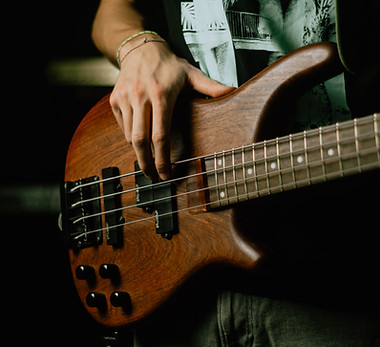
The bass guitar draws certain individuals to it for its interesting sound and captivating sound. Students learn how to use the dominant hand fingers to do strokes, using a pick, and understanding rhythm - an essential element of all instruments and particularly the bass guitar. Students studying bass will learn a variety of types of music, particularly blues, rock, jazz, pop, metal, and funk.
Violin/Viola

Learning violin can feel a little intimidating at first — there's no frets to guide your fingers, and getting that first clean note out of the bow takes some patience. That's exactly why we keep lessons relaxed and encouraging here. Whether you're a complete beginner or picking the instrument back up after years away, we meet you where you're at and build skills one small win at a time. Expect a mix of solid technique, real music you'll actually want to play, and plenty of room to ask questions and mess up along the way — that's how everyone learns. Come for the lesson, stay because it's actually fun.
Ukulele

This is one of the most approachable instruments to start on, which makes it a great fit whether you're 6 or 60. You'll usually be strumming a real song within your first couple of lessons — nothing kills motivation faster than months of drills before you get to play something fun, so we don't do that here. From there we build in chords, strumming patterns, and technique at a pace that actually feels good, not overwhelming. Whether you want to jam at family get-togethers or just have a chill hobby that doesn't take over your living room, ukulele lessons here are laid-back, encouraging, and genuinely fun.
Upright Bass

Upright bass is a bit of a physical instrument to learn — you're managing size, posture, and bow or pizzicato technique all together — but it's also one of the most satisfying once things click, since you can feel the low notes as much as hear them. Lessons focus on solid fundamentals early (hand position, intonation without frets, good posture) paired with real playing as soon as possible, whether that's walking bass lines, bowed classical pieces, or bluegrass grooves. Total beginners are welcome, and we'll work at a pace that builds confidence without burning you out on technique drills.